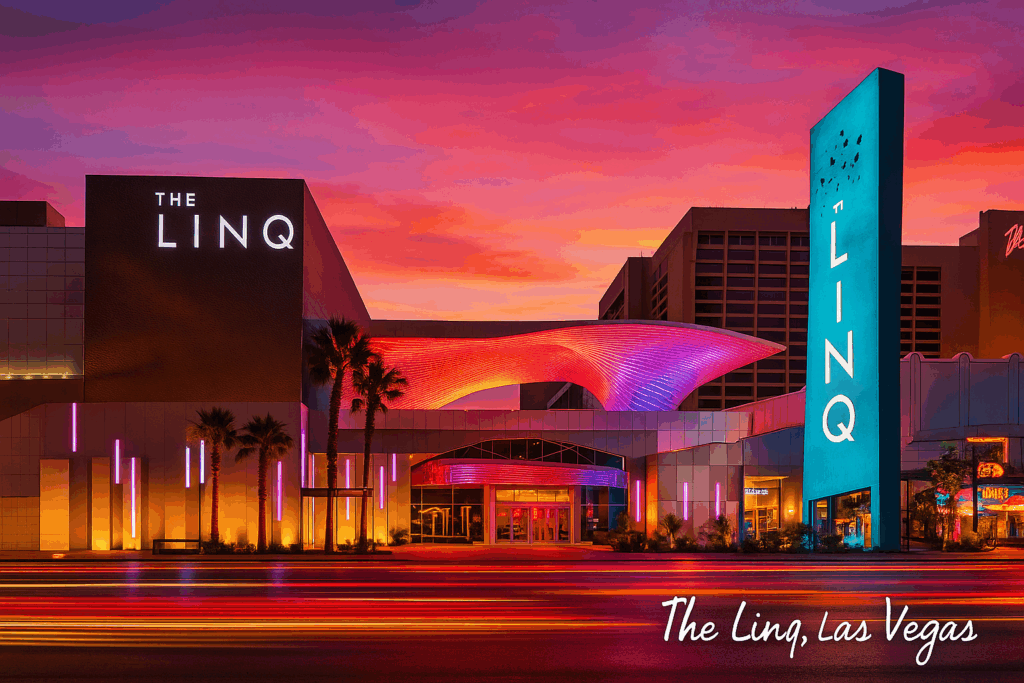

Once a glittering stage where fortunes turned on the spin of a wheel, The Flamingo Capri has traded its casino chips for a new lease on life. Where dice once rolled and cards were dealt, visitors now shop, dine, and stay overnight, while businesses flourish. This Las Vegas Strip icon has shed its gambling roots to emerge as a vibrant mixed-use development, blending residential, commercial, and cultural spaces. Its transformation is a high-stakes wager that paid off, offering a compelling tale of reinvention that resonates with developers, investors, and anyone intrigued by the evolving dance of real estate.
The Conversion Story: From Slots to Suites
What began as a modest motor inn evolved into a major Strip property under the ambitious vision of investor Ralph Engelstad. After acquiring the Flamingo Capri in 1971, Engelstad quickly expanded its footprint, adding a casino in 1972 and relocating some of the original motel structures to make way for new developments [1]. By 1974, the property had grown with additional wings, and in 1977, Engelstad unveiled the 19-story Imperial Palace Tower, boosting room capacity to 650. The transformation culminated in 1979 with a complete rebranding as the Imperial Palace, featuring a bold Asian-inspired theme—a first for Las Vegas [2]. The original motel structures were gradually demolished, with the last remnants disappearing as the casino underwent further renovations.
Engelstad’s expansions created a striking contrast between the property’s roadside motel origins and its new high-rise identity. Though the Imperial Palace embraced a cohesive Asian aesthetic, traces of its past lingered, giving it a unique character distinct from the flashier resorts nearby. The property’s evolution was not without challenges—including structural constraints and Engelstad’s own controversial legacy—but it ultimately secured its place as a notable, if unconventional, fixture on the Strip.
Impact and Significance: The House Always Wins
The Flamingo Capri’s conversion reshaped more than just its footprint—it sent ripples through the local community and real estate landscape. Since 2014, as part of a huge development project, The Linq, this property boasts the Linq Promenade, a bustling outdoor hub of bars, restaurants, and shops that draws both tourists and locals [3]. This shift from gaming den to mixed-use marvel revitalized the area, offering residential havens and commercial opportunities in a city once defined by transient thrills.
Economically, the transformation raised the stakes and delivered [4]. Construction and ongoing operations fueled job growth, from architects sketching blueprints to staff running daily operations. The influx of residents and businesses sparked a local commerce boom, lifting property values and proving the power of adaptive reuse. For investors, it’s a case study in turning outdated assets into profitable ventures, while developers see a model for blending history with innovation. This conversion mirrors a broader trend: as urban needs evolve, repurposing old casinos can deal a winning hand for sustainable growth.
Lessons Learned: Playing Your Cards Right
The Flamingo Capri’s story offers a jackpot of insights for real estate professionals:
- Preserve the Past: The property evolved while preserving some design elements from its early years. [5].
- Read the Room: Adapting to shifting demands—here, from gaming to mixed-use—ensures long-term viability.
- Innovate Boldly: Overcoming structural hurdles with clever design solutions turned limitations into strengths.
- Bet on Community: Enhancing local life through jobs and amenities builds support and boosts value.
These takeaways are a blueprint for raising the stakes on redevelopment, proving that vision and ingenuity can transform even the trickiest hands into winning plays.
Cashing Out on a High Note
From a gambler’s haunt to a cornerstone of modern living, The Flamingo Capri shows how to play the long game in real estate. Its legacy of neon and slot machines now underpins a thriving hub where people stay overnight, work, and connect. This transformation isn’t just a one-off—it’s a call to action for future conversions, urging developers to see beyond the cards on the table. In the game of real estate, sometimes the best bet is to double down on reinvention, turning yesterday’s risks into tomorrow’s rewards.
Sources
- Ralph Engelstad Arena. “Ralph Engelstad Arena,”
- National Technology Associates. “The Linq – Entertainment Complex,”
- Wikipedia. “The Linq,”
- Nevada Business Magazine. “Economic Forecast: 2015 Preview,”
- Eater. “The Living Room and the Vortex Deck to the Linq Hotel,”