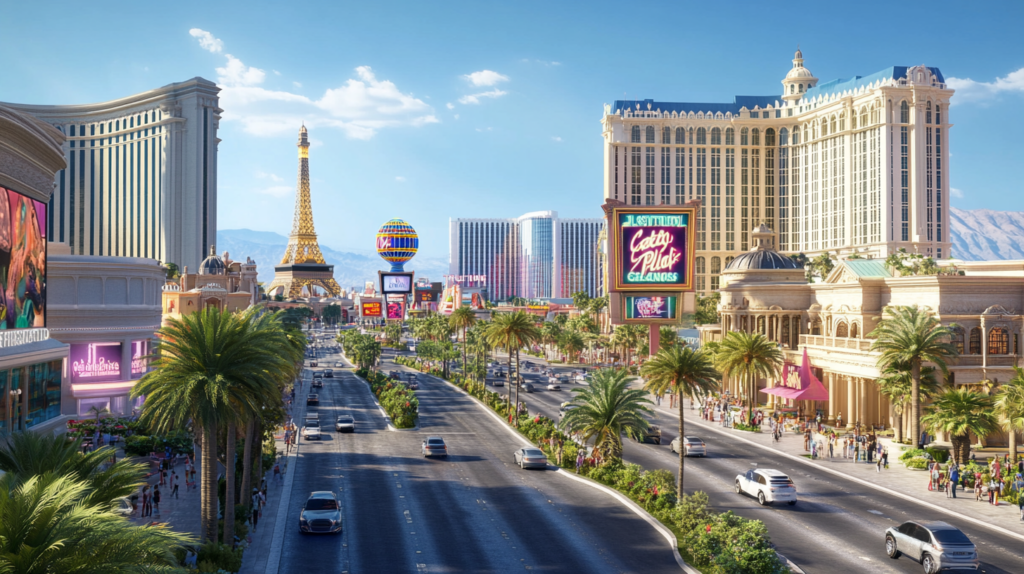

Las Vegas, Nevada, shines as the dazzling epicenter of the global gambling scene, a city where neon lights and high-stakes bets have turned a dusty desert patch into an entertainment juggernaut. Known as the “Gambling Capital of the World,” it lures millions yearly with its iconic casinos, luxury resorts, and electrifying shows. But beyond the glitz, Las Vegas’s real estate market tells a story of explosive growth, brutal setbacks, and unrelenting resilience—a rollercoaster ride that mirrors the city’s own gamble on greatness.
Historical Development
The saga began on March 19, 1931, when Nevada legalized gambling during the Great Depression’s darkest days [1], a desperate bid to jolt the state’s economy awake. Governor Fred Balzar’s signature unleashed a casino boom, transforming Las Vegas from a sleepy railroad stop into a playground for risk-takers. The El Rancho Vegas debuted in 1941, followed by the Flamingo in 1946, thanks to mobster Bugsy Siegel’s vision. These pioneers ignited the Las Vegas Strip, setting the stage for a real estate revolution.
Real Estate Boom
Casinos didn’t just bring gamblers—they brought a tidal wave of growth. As the Strip erupted with dazzling venues, land values soared, fueled by a frenzy of hotel and casino construction. From 1940 to 1960, the city’s population ballooned from 8,000 to over 64,000 [2], driven by casino workers and dream-chasers. Residential neighborhoods sprouted to house them, while commercial projects—think mega-resorts like the Mirage (1989) and Bellagio (1998)—pushed property values skyward. By the early 2000s, tourism-related investments hit $20 billion in Southern Nevada [3], turning barren sand into a real estate goldmine.
Challenges
Yet, Las Vegas’s bet on gaming and tourism left it exposed. The 2008 financial crisis slammed the city, slashing property values by over 60% between 2007 and 2012 [4]. Construction cranes froze, and foreclosures spiked as the housing bubble burst. Then came COVID-19, shuttering casinos in 2020 and slashing visitor numbers by 55% [5]. The real estate market teetered as jobs vanished and uncertainty reigned.
Resilience and Recovery
But Vegas doesn’t fold easily. After 2008, it diversified, wooing tech firms, healthcare giants, and even the NFL’s Raiders, stabilizing the economy and reviving real estate demand. Post-pandemic, the rebound was swift—gaming revenue smashed records at $14.6 billion in 2022 [3].
Current Landscape
Today, Las Vegas’s real estate is red-hot. Median home prices climbed to $475,900 by December 2024 [6], up 6.6% year-over-year. New projects, like the $1.8 billion Sony movie studio in Summerlin, promise jobs and further growth. Rents for single-family homes hit $2,203 in 2024, reflecting robust demand. Still, hurdles loom—water scarcity and affordability gaps challenge the market’s long-term odds.
The Legacy
From a desert outpost to a neon-lit metropolis, Las Vegas’s real estate saga is as bold as its casino roots. While gambling remains its heartbeat, the city’s adaptability ensures its property market keeps rolling the dice—and winning.
Sources:
- Nevada Historical Society: “Legalization of Gambling in Nevada”
- Wikipedia: “Las Vegas: Demographics”
- Nevada Resort Association: “The Impact of Gaming in Nevada”
- University of Nevada, Las Vegas Center for Gaming Research: “Nevada Gaming Revenues, 1984-2023”
- Las Vegas Convention and Visitors Authority: “Year-End Summary for 2020”
- The Luxury Playbook: “Las Vegas Housing Market Analysis & Forecast (2024 – 2025)”