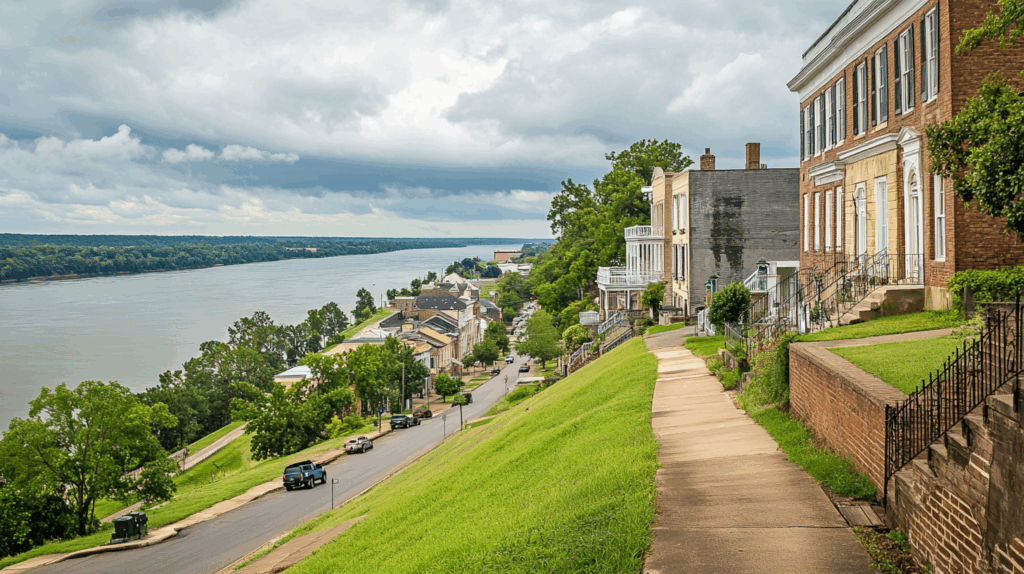

Picture Vicksburg, Mississippi, where the Mississippi River hums with history and the clatter of slot machines fills the air. The Ameristar and Riverwalk Casinos rise like beacons, pulling in tourists who split their days between Civil War battlefields and blackjack tables. Crowds spill into the streets, and that same energy pulses through a real estate market brimming with potential. On the surface, this gambling hub looks like a golden opportunity.
The Tourism Trigger
Mississippi’s 1990 Riverboat Gambling legislation initiated Vicksburg’s evolution, which gained full momentum when the community approved stationary casino vessels along the riverfront in 1992 [1]. What followed was a tourism boom that turned a sleepy historic town into a regional magnet. The Ameristar Casino Vicksburg, with over 1,000 slots, and the Riverwalk Casino, packing 550 slots and sports betting, can draw steady crowds from near and far [2][3]. Pair that with the city’s Civil War allure, think battlefields and museums, and you’ve got a recipe to attract visitors.
The Real Estate Game
But it’s not all aces. The market itself shows great performance with an 87 AirDNA score, although a 37% occupancy rate might be considered low and of concern to investors [4]. Seasonal tourism dips and gambling revenue volatility inject uncertainty, while regulatory shifts (like neighboring states expanding casinos) could dent Vicksburg’s edge. The bigger wildcard? The Mississippi River, now classified as the nation’s most endangered water system, experiences progressively worse flooding with each passing year [5]. Although historic downtown and casinos benefit from reinforced levees, as of right now, some areas of Vicksburg are flooded or inundated. Buyouts might create vacant lots for commercial use, if the investor budgets for floodproofing (elevation, $2K+/year insurance) in the future. The math could work if you treat water as a fixed cost rather than a dealbreaker, but climate change demands extra due diligence and raises the question: is it worth it?
Investor’s Playbook
If you’ve weighed all the risks, here’s how to play Vicksburg’s real estate game. Focus on historic properties near the casinos or as far as possible from the riverfront. Lofts or multi-family units with rental appeal are a good starting point, while entire homes occupy a significant share of the rental market. Time your buys for the off-season when prices dip. Current market data shows homes selling in about 65 days, a sign of slight demand in a city of over 20,000 [6]. Balance your real estate investments by combining vacation rentals with residential leases for permanent tenants. Most importantly, keep an eye on the water level trackers to prepare for the next flood. With median prices still reasonable, the table’s set only for well-calculated risks.
The Future Bet
Vicksburg’s story is one of grit and reinvention, but its real estate market now stands at a crossroads, where flood risks cast long shadows over its potential. Its casinos, affordability, and historic charm give it legs, while the Mississippi River’s growing fury demands respect, and investors must budget for floods like property taxes. The city offers upside for those who crunch the numbers, factoring in insurance, elevation costs, and climate volatility. New developments are brewing, tourism isn’t folding anytime soon, while the Mississippi River is a wildcard in this deck, making investors approach this with a cold head. Vicksburg rewards the bold, but only if you play the river, not just the odds.
Sources
- WLBT. “FLASHBACK 1992: Vicksburg votes to allow casino gambling,”
- ameristarvicksburg.com. “Casino Slot Machines & Video Poker – Ameristar Vicksburg,”
- Riverwalk Casino Hotel. “Home | Riverwalk Casino Hotel | Vicksburg, MS,”
- AirDNA. “Vicksburg Airbnb and Vrbo data from 179 properties,”
- Iowa Capital Dispatch. “Mississippi River named the most endangered of 2025 by non-profit American Rivers,”
- Realtor. “Vicksburg, MS homes for sale & real estate.”
Disclaimer: This analysis is for informational purposes only and does not constitute financial, legal, or investment advice. Readers should conduct their due diligence and consult qualified professionals before making any real estate decisions.